What Are Piano Lessons For?
This is a very personal manifesto about the purpose of piano lessons. You may not agree. You may disagree vehemently.
This is a very personal manifesto about the purpose of piano lessons. You may not agree. You may disagree vehemently.
One of my ‘rules’ for a while now has been that students need to do at least 100 hours practice
read more Examination Rules: How Many Hours Practice Does it Take?!
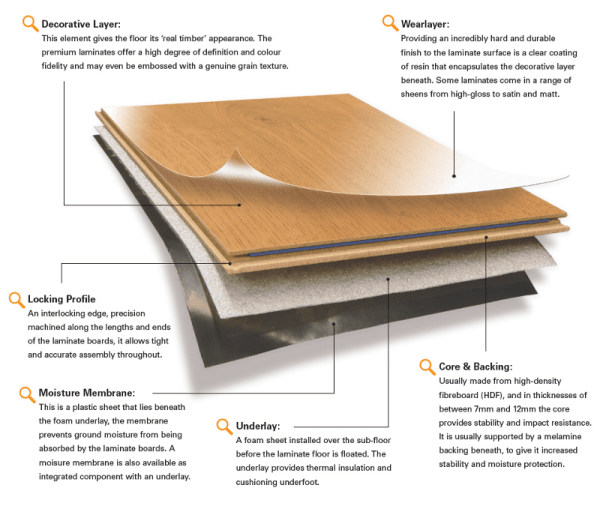
I’ve said it before, we piano teachers teach the way we were taught. And we do it because deep in our musical bones and our pianistic DNA we truly believe we were taught well. But upon deciding that, while our teachers served us well, we can serve our students better, how do we turn around a lifetime of habits we now perceive to be downright dangerous? The downright dangerous teaching habits are what I’ve called The Lamination Technique, where students are asked to learn the notes first, the rhythm next, then put hands together, then articulation, then dynamics, and so on over a period of months until finally the phrases are all welded together into something called a ‘performance’. The first thing is to truly believe that there is a better way, even if you are not quite sure what it might be. Like they say, if you don’t want anything to change keep doing what you’ve always done! If
read more Leaving ‘Laminating’ Behind: Step 1 – The Skill Set
I’m asking this question in response to some conversation following on from my Repertoire Rules (for students) post, where the
It seems that once upon a time in the not so distant past a general consensus amongst piano teachers existed
These rules are rules about students and repertoire, but really these are more rules for piano teachers… So for any students reading this post – this is the stuff your teacher should know! In the 11 month history of my blog I’ve discussed how students having access to more books of music is going to have a positive impact on their musical literacy, and how learning a large number of pieces each year will have commensurate educational benefits. I’m not going to rehash either of these posts, but rather cut straight to: what are the rules we need to apply to students and their repertoire? First up: a rule of thumb. If your student learns less than 26 pieces per annum they will be bored. They may not tell you they are bored, but they are. If learning 6 pieces a year truly engages their curiosity they must be almost entirely disinterested in learning to play the piano. On the other
Yesterday I gave a one hour presentation at the BlitzBooks-organised Winter Piano School held in Sydney’s CBD with the title “An In-Depth Look at Repertoire Collections”. I went along with a suitcase full of books for an intensive show and tell session: collections for beginners, graded collections, period-collections (Baroque, for instance), geographical collections (Australian, for instance) and stylistic collections (tangos, for instance). 16 kilograms of print music material. My intention was to begin with a short spiel about the importance of repertoire, covering the need for teachers to invest their time and money in getting to know new pieces every year, as well as the need for students to work on a much greater number of pieces than traditionally has been the case (a topic I’ve covered in my blog previously). And then I was going to launch into the music in the suitcase… The “rationale for repertoire” part of my presentation was supposed to be about how music is
Exam boards release new graded material from time to time, unpredictably in the case of the AMEB, every two years like clockwork in the case of the ABRSM, and it’s an exciting moment when piano teachers get to take a look at the new material they can/will use with their students over the next few years. Particularly exciting when a personal favourite makes the cut, or an appealing piece one hasn’t come across before, but the downside is always possible: discovering inclusions that simply are too hard for students to seriously consider performing them in a graded assessment context. ABRSM doesn’t often stray in this regard – in fact, I’d say that teachers with more than 20 years experience would say that the selections have been getting easier (not harder) over the years. But the AMEB, with its 100+ pieces per grade syllabus, seems to lurch all over the place in terms of the grading of pieces, often with the
read more How Hard Is a Piece of Music: June 2010 Installment
What does the result a student gets in an AMEB exam actually mean? It’s a letter (sometimes with a + attached) and it’s easy to think that this result relates to the A/B/C/fail system we know from general education. But is it so? Just this last week my mum, Anita, and I were organising entries of our piano students for AMEB exams. Not all our students sit exams, and not all the students who sit exams do so every year; the decision to take an exam is not one made on automatic pilot. It’s not just about whether the student is ready for the next grade, it’s about how an exam will impact on their other (pianistic, musical, educational, experiential) goals and plans for the year. One of the considerations we take into account is the likelihood of a pleasant to exciting experience and an excellent result in the assessment. This seems somewhat obvious, and one would think that any
So of all the composers in the twentieth century it seems that Bartok is the one we piano teachers revere the most, and of all the works for students of the piano ever written by Bartok we reserve our highest regard for that collection of the pieces he wrote for the lessons he gave to his son, Peter: the Mikrokosmos. It’s systematic, it’s progressive, it was written for the composer’s own nine year old son, it’s designed to be used from the very beginning (Bartok’s own words), it draws on the folk music of a wide area of eastern Europe (at least we think it does) and it represents a very ‘modern’ (in that first half of the 20th century sense) way of playing the piano. What’s not to like? And yet, whenever I speak with piano teachers about the Mikrokosmos the same guilty secret is whispered all over the land: we respect this collection above all others, and yet

 Elissa Milne