This blog has been a bit of an experiment so far – an experiment in how-to-blog, as far as I am concerned, and I’ve realised that I probably haven’t included a whole lot of useful factual information about myself so far….. So to rectify a little: I’ve been composing educational piano music since 1995 when an adult student (probably no older than 22 at the time) said to me “But what I really want to do is to play the way you do when you are playing your own music”. This set me back quite a bit, as I had never given any thought to teaching my students to play the way I did when I wasn’t performing ‘repertoire’. My teaching was somewhat traditional in terms of content, style, outcomes and expectations. But my performing life was anything but traditional, and many parents had sent their children to me to have lessons after they had seen me performing. My adult student
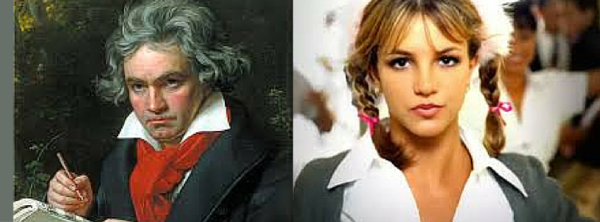
“Beethoven to Britney”: my response
Here is the letter published in this October’s Platform Papers (published by Currency Press, Sydney, Australia) in response to an

Scales as propaganda
Why do we require our students to learn scales? It’s heresy, really, to suggest giving piano lessons without teaching students
Spells trouble
So here in Australia, thanks to Senator Fielding, we now know that ‘fiscal’ has neither 3 syllables (as in physical) nor a K. Turns out that Fielding has trouble with language thanks to a form of dyslexia that resulted in his achieving only 29 in his final high school English exams. His other marks were exceptional (all in the 90s) so this is not an issue of intellect, but rather of a specific aptitude that Fielding lacks in regard to language skills. Fielding was addressing a media contingent a few days ago, and after he had referring several times to ‘physical policy’ one intrepid reporter inquired if he didn’t mean ‘fiscal policy’. Fielding replied “fiscal – F-I-S-K-A-L” to the collective surprise (and then delight) of everyone in the media who knew that’s not how you spell fiscal. So now we have people coming to Fielding’s defence, saying “leave the poor bloke alone, he can’t help it if he can’t spell”.
Repertoire Choices: the start of the year
When choosing repertoire for their students, piano teachers often find themselves navigating a dangerous course between discouraging and dull, and these somewhat negative terms of reference frame the often frought quest for music that will inspire, instruct and entertain. The start of the new teaching year sees returning pupils full of enthusiasm for the sheet music they bring with them to that first lesson, maybe the music their much more advanced best friend is learning, maybe the latest piano-based pop song, and (these days) maybe something they saw on YouTube and downloaded from a free sheet music website. No matter what, the music is likely to be much more technically demanding than the student’s current skill set caters for, possibly unpianistic and, to top it off, of limited pedagogic value. There are a number of ways for a piano teacher to respond to this enthusiasm (and attendant sheet music). The first is to discard whatever plans may have been laid
Jasper’s Beanstalk
There are books that demand one’s attention on the shelves of the children’s section in the bookshops of the world, and then there are the books that, out of the blue, one notices already sitting on one’s bookshelf, a gift probably, maybe given in anticipation of the child’s changing tastes in reading material, so unread at the time of receipt, but now ripe for exploration. Jasper’s Beanstalk was one of these less noisy books that was given to my son when he was still much too young to appreciate or enjoy its charms. But one day, quite unintentionally, Jasper’s Beanstalk was pulled from the shelves, and we began to read. We read about a cat, Jasper, who found a bean and decided to help it grow. Each day Jasper tries some new gardening technique to encourage the bean to sprout, until he despairs of ever seeing a beanstalk… The trick with any picture book is, of course, to have a
Unconvincing arguments for music education
In the debates over the place of music in education a range of arguments are put forward as to why music education should be a mandatory component of every child’s schooling. Most of these arguments are unpersuasive, as it turns out; the proof of this bold assertion is in the fact that most children’s music education is cursory, peripheral, or non-existent in all but the very best-resourced schools. The first argument that really underpins most pleas for music education for all children is that music is good. Not that it is good for you (that would be a utilitarian argument) but rather that it is good in and of itself, and by virtue of this all children should be educated in music. [This is the educational equivalent of believing that music is not about anything, that it is about itself, or that it about nothing, and this was certainly the dominant view in academia for much of the second half
Is music really all that important?
Back in 2004 the Australian federal government announced that it would fund a comprehensive survey of music education with a view to making recommendations for changes to benefit school children across the country. Unsurprisingly (to me, and I’m sure many other musician-educators) this comprehensive survey found that primary school children receive not too much music education throughout primary school, primary school teachers do not receive adequate training in music education, and specialist music teachers are no longer being recruited to primary schools. Most schools have paltry resources with which to provide music education, and most children do not have access to instrumental tuition. There are exceptions: Queensland has operated a strong instrumental tuition program in primary schools for years, some private schools are as well resourced as universities (possibly better than some). So now we know the facts. Should the elimination of music in a child’s primary education be a cause for concern? On Monday Dick Letts, the head of
Why I am such a fan of “That’s Not My…”
I’m almost a bit self-conscious about how much of a fan I am of the Usborne series “That’s Not My…”. Learning that a new title has been released has me in a state of complete excitement, and I don’t know how much time I’ve spent poring over the series, figuring out which books will make the perfect customised collection for my son. If you’ve not heard of them before: “That’s Not My….” is a series of what they call feely-touchy books; the illustrations in these board books have textured inserts that are ‘rough’, ‘slimy’, ‘velvety’, ‘and so on. So in “That’s Not My Lion” (the first book I bought for my son) “its paws are too rough”, and in “That’s Not My Dragon” (the second book I bought, out of respect for my husband’s St George rugby league fixation) “its claws are too knobbly”, while in “That’s Not My Monkey” (a much more recent acquisition) “its feet are too smooth”, and
How hard is a piece of music: exhibit A
The trouble with grading a piece of piano music is that one has to agree that certain things that one can do on the piano should be learned in a particular order. The traditional view is that the easiest music is where the thumbs share middle C and only white notes are played. Oh yes, and the rhythm should be a simple sequence of crotchets. Meantime, school kids from all ends of the globe gather around classroom pianos to teach each other a sequence of tonic chords (moving around the keyboard, in a swing groove) to be played in duet with a friend playing a melody that requires shifts in hand position (or, I suppose, turning over the thumb) and an extension beyond the five-finger position. And nearly every school child with access to a piano seems to be able to learn this feat of keyboard skill. Should we be taking a new look at what makes a piece of
 Elissa Milne